

Dr. Wassef is an experienced dentist serving patients in Hazlet, Holmdel, and surrounding NJ communities. Known for precision care and personalized treatment for even the most complex cases, he’s helped countless patients save their teeth and restore their smiles.

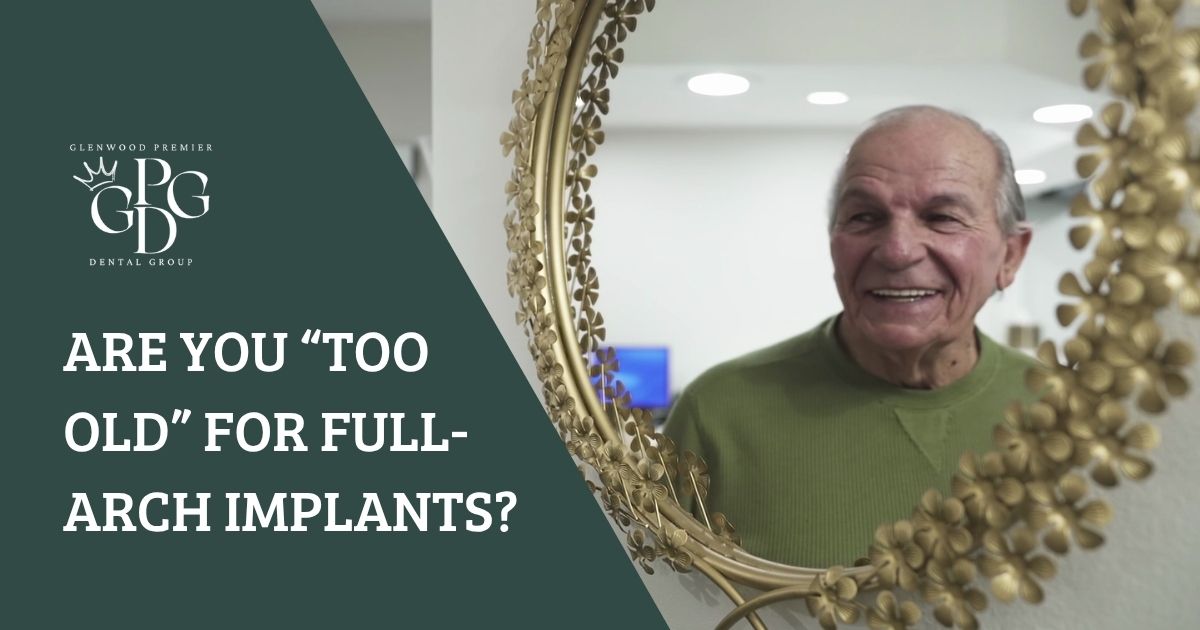
Age itself isn't a disqualifier for full-arch dental implants. Healing capacity, medication management, systemic health, and how long the patient plans to enjoy the outcome are the actual factors that determine whether treatment fits. Many patients in their 70s and 80s complete full-arch treatment successfully and describe it as one of the best decisions of their retirement years.
The right question isn't "am I too old for this." It's "does the evaluation of my specific case say the treatment fits."
Why age gets treated as the deciding factor (and why that's often wrong)
Patients over 65 who research full-arch implants often encounter an implicit assumption that treatment is aimed at younger patients. Marketing images skew younger. Sales conversations emphasize "decades of use" that older patients calculate against their own life expectancy. Well-meaning family members sometimes suggest that dentures would be simpler.
The result is that older patients often disqualify themselves before a real evaluation happens. That self-disqualification is usually wrong. Age is a factor in the treatment decision, but it's one of several factors, and it's rarely the deciding one for otherwise healthy patients.
The dental implant field has evolved substantially in the last two decades. Techniques are gentler. Recovery is faster. Success rates in older patients now approach the rates seen in younger patients, provided the underlying health picture supports treatment. That's a meaningful shift from the assumptions many older patients grew up with.
The evaluation is what tells you whether treatment fits your specific case. Not your age, not a marketing image, and not a family member's opinion.
Four questions patients over 65 should ask before full-arch implant treatment
At Glenwood Premier Dental Group, four questions determine whether full-arch treatment is appropriate for an older patient. Each question has a specific answer that comes from the evaluation, not from a general assumption about age.
1. What's my current healing capacity?
Healing takes longer at 75 than at 45. That's true for any surgical procedure, and it's true for implant surgery. What matters is how much longer, and whether the healing pattern still supports successful integration of the implants with the bone.
For most healthy older patients, the answer is that healing is slower but still adequate. Osseointegration typically takes three to six months in younger patients and may take slightly longer in older patients, but the process itself is not fundamentally different. Success rates for implant integration in patients over 65 who have adequate bone and normal healing capacity are consistently high in the clinical literature.
Where healing capacity becomes a genuine concern is in patients with specific conditions that affect wound healing: uncontrolled diabetes, immune-suppressing medications, active cancer treatment, and certain autoimmune conditions. Each of these is a factor in the treatment plan, not an automatic disqualification. Well-controlled diabetes, for example, doesn't rule out implant treatment. Uncontrolled diabetes does, and the difference is worth addressing before surgery.
The evaluation for older patients should include a specific conversation about healing factors, not a generic assumption based on age. Practices that treat "over 65" as a category rather than evaluating each patient individually are applying a default that often doesn't fit.
2. What medications am I taking, and how do they affect the treatment?
Medications become more relevant to dental surgery as patients age. Some affect bleeding. Some affect bone density. Some affect wound healing. Some affect the safety of certain sedation options.
Blood thinners (warfarin, apixaban, rivaroxaban, and others) affect how bleeding is managed during and after surgery. Most patients on blood thinners can still receive implant treatment, but the medication management before surgery needs to be coordinated with the prescribing physician.
Bisphosphonates (Fosamax, Boniva, and similar medications used for osteoporosis) affect bone healing and, in rare cases, are associated with a condition called medication-related osteonecrosis of the jaw (MRONJ). Patients on oral bisphosphonates typically can still receive implants safely. Patients on intravenous bisphosphonates, or those who've received them long-term, need a more careful risk-benefit conversation before surgery.
Certain diabetes medications, immunosuppressants, and steroids all factor into the treatment plan in specific ways. The evaluation should include a full medication review, not just a general medical history. Practices that don't ask about specific medications during the consultation are missing information that affects treatment planning.
The right approach: bring a complete list of current medications (prescription and over-the-counter) to your consultation. A practice that handles older patients regularly will know which medications matter and how to address them.
3. What's my overall systemic health picture?
Systemic health matters more than age itself. A healthy 78-year-old is often a better candidate for implant treatment than an unhealthy 55-year-old.
The specific factors that matter include cardiovascular health (particularly for patients considering deeper sedation options), diabetes control, kidney and liver function (which affect medication metabolism), any active infections or immune conditions, and general fitness for a multi-hour surgical procedure.
Most of these factors are managed rather than eliminated. A patient with well-controlled hypertension can receive implant treatment safely with appropriate monitoring. A patient with well-managed diabetes can receive implant treatment with attention to blood sugar during recovery. Active issues need to be addressed before surgery. Chronic but stable conditions are usually workable.
The right conversation with the practice covers your specific health picture, not a generic older-patient template. This is also where coordination with your primary care physician becomes valuable. Many practices routinely communicate with the patient's medical team before surgery to confirm that treatment is appropriate.
4. Does the investment horizon still make sense for me?
This is the question older patients often hesitate to ask directly, and it deserves a direct answer.
Full-arch implants are designed to last for decades. For a patient in their 70s or 80s, the investment horizon calculation looks different than it does for a patient in their 40s. That's a legitimate consideration, and it doesn't have a single right answer.
Several ways of framing the question produce different but valid conclusions.
The direct math: a full-arch case costs a certain amount now and produces a fixed prosthesis that will function for as long as the patient wears it. Divided across the years the patient will actually use it, the cost per year of use is often lower for older patients than the cost of alternatives (dentures with ongoing adjustments and replacements, continued dental problems from failing teeth, and the quality-of-life costs of not treating).
The quality-of-life frame: the years an older patient has ahead are also the years they most want to enjoy freely. Being able to eat what they want, smile without self-consciousness, and travel or dine out without denture-related planning is a significant contributor to quality of life in the years when it matters most. Many patients describe the treatment as one of the best decisions they made in retirement precisely because it removed a daily source of frustration during years that were meant to be free of it.
The alternative-comparison frame: patients who delay treatment often assume the alternative is nothing, when the actual alternative is continued dentures with their limitations, or continued deterioration of failing natural teeth, or dental problems that compound over the coming years. The honest comparison is between treatment now and whatever path the patient is currently on over the same years ahead.
None of these frames is universally correct. Each patient weighs them differently based on their financial situation, their health expectations, and their personal priorities. What matters is that the conversation is explicit and the patient reaches their own conclusion based on real information rather than an assumption about age.
Specific concerns older patients often bring to the consultation
Beyond the four core questions, older patients frequently arrive with specific concerns worth addressing directly.
The first is surgery duration. Full-arch cases take several hours, and older patients sometimes worry about tolerating that. Modern sedation options (particularly IV sedation) make longer procedures manageable for most older patients without extending recovery significantly. The sedation options post covers how to choose the right sedation level for your specific case.
The second is recovery burden. Older patients sometimes worry about being incapacitated during recovery, either because they live alone or because they're the caregiver for a spouse. Full-arch recovery is more manageable than most older patients expect, but it's worth planning for. Having someone available for the first 24 to 48 hours, arranging soft food in advance, and adjusting expectations for the first week are practical steps that make the recovery easier. The 90-day recovery timeline post walks through what to expect at each stage.
The third is bone loss from long-term denture wear. Older patients who've worn dentures for many years often have significant bone loss in the areas where implants would be placed. That's a real factor, but it rarely disqualifies patients from treatment. The bone graft post covers when grafting is genuinely required and when angled-implant protocols can work around bone loss without extensive grafting. The denture-to-implants transition post covers what long-time denture wearers should specifically expect from the evaluation.
The fourth is coordinating with existing medical care. Older patients often have relationships with primary care physicians, cardiologists, or other specialists who should be part of the treatment planning. Practices that handle older patients regularly coordinate with these providers routinely. Practices that don't are missing an important step.
What the evaluation should specifically include for patients over 65
A real evaluation for an older patient covers everything the standard evaluation covers plus several age-specific additions.
The standard components apply: 3D imaging, bone volume assessment, protocol recommendation, treatment plan, and cost breakdown. Those don't change based on age.
The age-specific additions include a complete medication review with attention to how each medication affects treatment, coordination with the patient's primary care physician when appropriate, a specific conversation about healing capacity and any factors that affect it, and an explicit discussion of the investment horizon question so the patient reaches their own conclusion based on real information.
The evaluation should also address the practical questions the patient is likely holding. What sedation will be used and why. What recovery will look like specifically. Who to call if something feels off. What follow-up looks like over the years ahead.
A practice that provides all of this is set up to serve older patients well. A practice that treats "over 65" as a category to be handled generically is applying a default.
The right practice takes age seriously without treating it as the answer
Age is a real factor in full-arch implant treatment for older patients. It's not the only factor, and it's not usually the deciding one. The evaluation is what determines whether treatment fits a specific patient's case.
Patients in their 70s and 80s who receive full-arch treatment successfully overwhelmingly describe it as worth the investment. The years they get to enjoy the outcome are the years they most wanted to enjoy freely. Delaying treatment because of an assumption about age often means losing years that treatment could have improved.
Schedule a free consultation with Dr. Wassef at Glenwood Premier Dental Group in Hazlet, NJ. You'll get a 3D scan, a treatment plan, and an age-appropriate evaluation that addresses your specific health picture, your medications, and your investment horizon. The answer isn't the same for every patient over 65, but the honest version of that answer is the one worth having.


