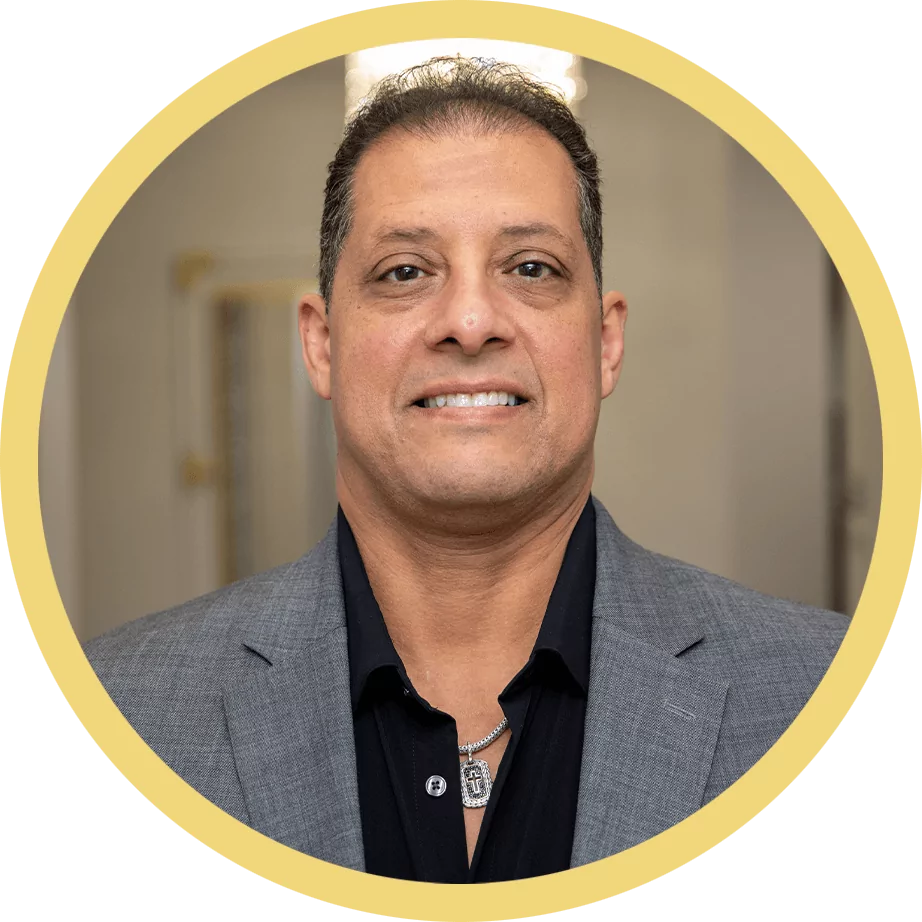
Dr. Wassef is an experienced dentist serving patients in Hazlet, Holmdel, and surrounding NJ communities. Known for precision care and personalized treatment for even the most complex cases, he’s helped countless patients save their teeth and restore their smiles.

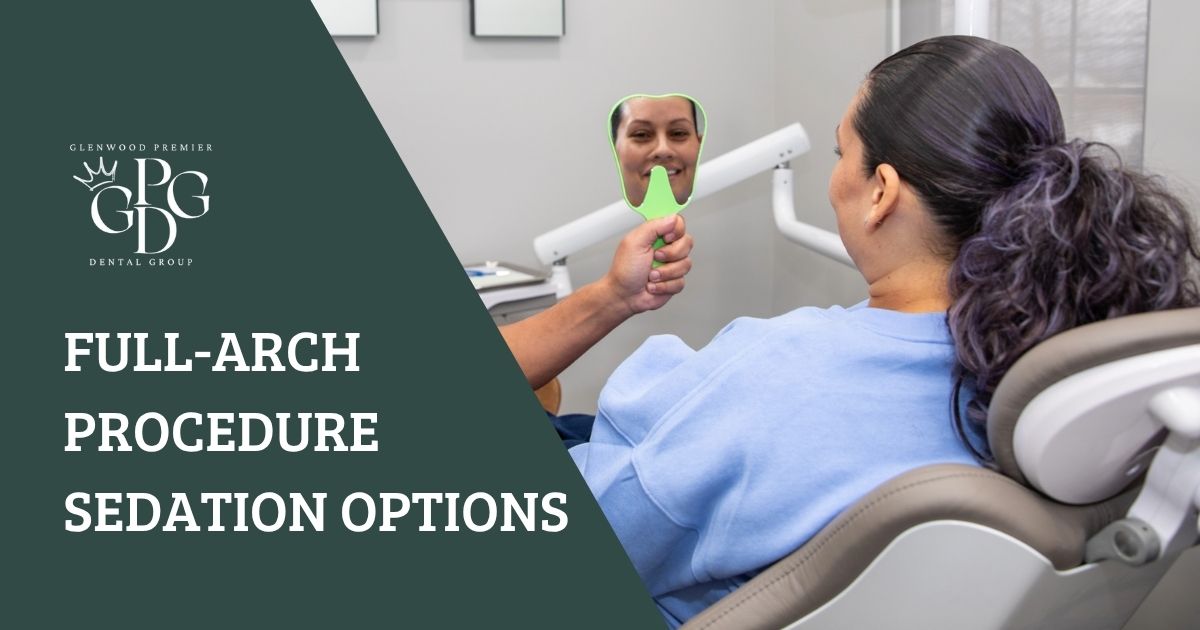
Full-arch implant surgery can be performed under four different levels of sedation, from local anesthesia alone (fully awake, area numbed) to general anesthesia (fully asleep). Which level is right depends on your anxiety level, your medical history, the complexity of your case, and your personal preference. Practices that offer only one option are limiting patients rather than serving them.
The right choice depends on you specifically, not on a practice default.
What "sedation" actually means for full-arch implant surgery
The word "sedation" gets used loosely. In dental contexts, it covers a range from mild relaxation to full unconsciousness, and the differences matter both clinically and practically.
At the mildest end, local anesthesia numbs the surgical area completely but doesn't affect consciousness. The patient is awake, aware, and can respond to the surgical team. At the deepest end, general anesthesia produces full unconsciousness with no awareness or memory of the procedure. The two middle levels (oral sedation and IV sedation) produce varying degrees of relaxation and reduced awareness while still allowing the patient to breathe on their own and respond to prompts.
For full-arch implant surgery specifically, all four levels are viable options for most patients. The choice isn't about what's possible. It's about what fits your specific situation.
The four sedation levels for full-arch implant surgery
At Glenwood Premier Dental Group, four sedation options are available for full-arch cases. Each has a specific patient population it fits best.
1. Local anesthesia alone
Local anesthesia is what most patients think of as "getting numbed up at the dentist." An injection of anesthetic (typically lidocaine or a similar drug) numbs the surgical area completely. The patient is fully awake and aware throughout the procedure but feels no pain from the surgical work itself.
Patients who fit this option well tend to be those with low dental anxiety, prior comfortable experiences with dental procedures, and no strong preference for being unaware during surgery. They can hear the team, feel pressure, and be part of the experience while feeling no pain.
The advantages are recovery-specific: no lingering grogginess, no dietary restrictions before surgery, no need for a driver, and the fastest return to normal activity. The trade-off is awareness. Patients who dislike the sound of dental work, who feel claustrophobic in a dental chair, or who have general anxiety about surgery often find local anesthesia alone harder to tolerate than they expected, even when the pain is genuinely controlled.
2. Oral sedation
Oral sedation adds a pill (typically a benzodiazepine like triazolam or diazepam) taken before the procedure. The patient stays awake but is significantly more relaxed. Many patients describe it as feeling drowsy, calm, and detached from the surgical experience without being unconscious.
Patients who fit this option well tend to have moderate dental anxiety, a preference for feeling calmer without being asleep, and no medical contraindications to the medication. Oral sedation is also useful for patients whose anxiety about the procedure itself is manageable but who dread the length of the surgery. Full-arch cases can take several hours, and calm relaxation over that time is genuinely valuable.
The practical requirements are real. Patients taking oral sedation need a driver to and from the appointment, cannot drive or make legal decisions for the rest of the day, and typically have some memory gaps around the procedure (which most patients consider a benefit, not a drawback). Recovery is slightly slower than with local alone but faster than with IV sedation or general anesthesia.
3. IV sedation
IV sedation delivers medication directly through an intravenous line, producing what's often called "twilight sedation" — a state of deep relaxation and reduced awareness where the patient can still breathe on their own and respond to verbal prompts but typically has no memory of the procedure afterward.
Patients who fit this option well tend to have high dental anxiety, a strong preference for being unaware during surgery, or complex cases that would benefit from a completely still, cooperative patient over several hours. IV sedation is often the preferred option for patients who describe past dental experiences as traumatic and want reassurance that this one won't feel like another version of that.
The clinical advantages are significant. Depth of sedation is easily adjusted throughout the procedure, allowing the team to keep the patient comfortable without over-sedating. Recovery from IV sedation is faster than from general anesthesia because the patient never fully loses consciousness. Memory of the procedure is typically absent, which for many patients is precisely the point.
Practical requirements are more involved than oral sedation. Patients need to fast (typically no food or drink for six to eight hours before), require a driver, cannot drive or work for the rest of the day, and need a longer recovery window before feeling fully normal. IV sedation also requires a provider trained specifically in administering it, which not every practice offers in-house.
4. General anesthesia
General anesthesia produces full unconsciousness. The patient is fully asleep, has no awareness of the procedure, and requires assistance with breathing during surgery (typically through an endotracheal tube). This level of sedation is administered by a board-certified anesthesiologist or a certified registered nurse anesthetist (CRNA).
Patients who fit this option well are relatively few for full-arch cases. General anesthesia is most appropriate for patients with severe dental phobia that other sedation levels can't manage, patients with significant medical conditions that make IV sedation less appropriate, patients undergoing extremely complex cases where being fully unconscious offers real clinical advantages, and patients whose preference for full unawareness overrides the additional cost and recovery involved.
The practical requirements are the most involved of any option. Fasting is required. A dedicated anesthesia provider is required. The recovery period is longer, sometimes requiring an hour or more in a recovery area before the patient is safe to leave. Cost is significantly higher because of the additional provider and equipment. And the risks, while very low for healthy patients, are still higher than with any other sedation option.
For most full-arch patients, general anesthesia is more than what the situation requires. But for the patients who genuinely need it, no other option provides the same experience.
How to choose between them
Four factors determine which sedation level fits a given patient's case.
The first is anxiety level. Patients with low anxiety often do well with local alone or oral sedation. Patients with moderate anxiety typically do best with oral or IV sedation. Patients with high anxiety usually need IV sedation or, in severe cases, general anesthesia.
The second is medical history. Some patients have conditions or take medications that affect which sedation options are safe or appropriate. Cardiovascular conditions, respiratory conditions, sleep apnea, certain medications, and pregnancy all factor into the decision. A patient's medical history is part of the evaluation, and any competent sedation provider will review it before recommending an option.
The third is case complexity. A straightforward full-arch case in a patient with good bone might be completed in two hours. A complex case involving extractions, grafting, and multiple implants might take four hours or more. Longer, more complex cases favor deeper sedation because staying comfortable in the chair for that duration under local alone is harder than most patients realize.
The fourth is personal preference. Some patients strongly prefer to be aware. Others strongly prefer to be unaware. Both preferences are legitimate, and a good provider respects them within the limits of what's safe. Patients who feel dismissed or overruled about their sedation preference often carry that resentment into recovery.
The right conversation with a prospective provider covers all four factors. Practices that recommend a sedation option without asking about the patient's anxiety, history, and preference are applying a default. That default may be fine, but it isn't tailored.
Practical logistics of each option
Beyond the clinical considerations, each sedation level involves practical logistics worth planning for.
Local anesthesia alone has the fewest practical requirements. Eat normally beforehand, drive yourself, and expect to return to work the same day or the next day depending on how you feel.
Oral sedation adds a few steps. Eat a light meal several hours before (unless instructed otherwise), arrange for a driver, and plan for the rest of the day off. Some patients feel normal by evening. Others feel drowsy well into the night.
IV sedation requires more preparation. Fast for six to eight hours before, arrange for a driver, and plan for a full day of rest. Most patients feel functionally normal the following morning but should not drive or make significant decisions until then.
General anesthesia has the most involved logistics. Follow the specific fasting and preparation instructions provided by the anesthesia team (typically stricter than IV sedation), arrange for a driver and ideally a caregiver for the rest of the day, and plan for two to three days of reduced activity while the anesthetic clears fully.
Regardless of the sedation level chosen, patients should have their post-op instructions in writing before leaving the office, know how to reach the practice if something feels off during recovery, and have realistic expectations about what the first 24 hours will feel like.
What to ask a prospective practice about sedation
Five questions separate practices that handle sedation well from practices that treat it as an afterthought.
The first: which sedation options do you offer in-house? Practices that only offer local anesthesia or oral sedation are limiting your options. Practices that offer IV sedation and can arrange general anesthesia when needed give you the full range to choose from.
The second: who administers the sedation? For local and oral, it's typically the dentist. For IV, it should be a provider trained specifically in IV sedation administration. For general anesthesia, it should be a board-certified anesthesiologist or a CRNA. The training of the person administering the sedation is directly related to your safety.
The third: how do you decide which sedation level is right for a specific patient? The right answer covers your anxiety, medical history, case complexity, and preference. The wrong answer is a version of "we usually just do X."
The fourth: what does recovery from each option look like specifically? Practices that can walk you through the recovery experience for each option have thought about the patient experience carefully. Practices that give vague answers haven't.
The fifth: what's the cost difference between sedation options? Deeper sedation costs more because of the additional providers, equipment, and time involved. Practices should be able to tell you the cost of each option and what's included so you can factor sedation into your overall treatment cost.
The right sedation is the one that fits your case
Full-arch implant surgery doesn't require any single sedation level to be successful. It requires the sedation level that fits your specific situation. Anxious patients deserve deeper sedation without being made to feel unreasonable. Calm patients deserve to stay awake if that's their preference without being pushed into deeper sedation than they need.
The evaluation should include a real sedation conversation. Not a checkbox. Not a default. A conversation that produces a specific recommendation you understand and agree with.
Schedule a free consultation with Dr. Wassef at Glenwood Premier Dental Group in Hazlet, NJ. You'll get a 3D scan, a treatment plan, and a direct conversation about which sedation option fits your case. For more on what the days after surgery actually look like, the 90-day recovery timeline post walks through the full picture.